
BLOG

Celebrating South Australian Winery Success With Angove Family Winemakers

Gorilla Customer Angove Family Winemakers are a...

Gorilla Customer Angove Family Winemakers are a fifth-generation family business dedicated to crafting super-premium and single-vineyard McLaren Vale wines.
Gorilla is so proud to hear of all the success our customers have in the South Australian wine industry showcased in The Producers Book. Read more about Angove Family Winemakers as written by Katie Spain & published by BudMedia. Get your copy of The Producers Book here today.

When Victoria Angove watches her daughter play football at Tea Tree Gully in the Adelaide foothills, it is a trip down memory lane. “That’s where it all started,” she says. “The business started as a hobby very much to support a medical practice. It really did build from there.”

Angove Family Winemakers was founded in 1886 when Dr William Thomas Angove emigrated from Cornwall, England, to Tea Tree Gully. Once settled, he established a medical practice and began making wine as a tonic for his patients.
He planted 10 acres of vines and produced dry table and fortified wine. A growing customer base turned the hobby into a business. “Every generation has really had a different influence on the evolution of the business,” Victoria says.

Thomas ‘Skipper’ Carlyon Angove (William’s son) took things to the next level when he produced a diverse range of wines for local and export markets (no mean feat during the two world wars). He also established a new winery in Renmark in 1910 – the first in the region. It was an exciting chapter, during which the family produced still and fortified wines and also established the St Agnes Distillery. When Thomas William Carlyon Angove completed a degree in oenology at Adelaide University’s Roseworthy Campus, he cemented the brand’s focus on quality winemaking. Over time he expanded the crushing and processing facilities, planted the Nanya Vineyard (the largest single vineyard in the Southern Hemisphere at the time), and was responsible for significant industry innovations. His efforts earned him an Order of Australia in 1994.

During his tenure, the winery was thrown a curve ball. “In the late seventies, our premium vineyard holdings in Tea Tree Gully were compulsorily acquired by the Dunstan government and turned into housing,” Victoria says. “It was pretty tough for our business, though I don’t remember much because I was only five.” She does, however, recall sitting on the crushers with her brother and joint managing director Richard, now an established winemaker in his own right. “We were country kids, so we spent a lot of time outside and we were, to some extent, allowed to explore the winery a lot on weekends. It was a very carefree childhood and there was never any pressure or overt expectation that we would have to go into the family business at all. Mum and Dad were very keen for us to follow what we loved. Education was really important to both of them, as was work ethic – something I’m so deeply grateful for.”

John Carlyon Angove, the fourth generation of the family, took over from his father in 1982 and has dramatically evolved the business, with a focus on organic viticulture and winemaking and premium and single-vineyard wine from McLaren Vale. The family is Australia’s largest organic grape grower and winemaker, with all family owned vineyards (approximately 500 hectares) farmed using organic principals and either in conversion or certified organic.

In 2008, the family purchased a unique and historic vineyard in McLaren Vale and renamed it the Warboys Vineyard. It, too, is farmed using organic and biodynamic practices. In 2011, their spectacular cellar door and function facility opened in the heart of McLaren Vale and is very much the jewel in the crown.

Now, Victoria, Richard and their sister Sophie lead one of the most significant family-owned and operated wine businesses in Australia. It has five generations of winemakers and more than 130 years of history behind it. The future is bright. “We are very lucky to have an incredible team that we work with across the entire company. There is a strong family ethos that Dad has passed down to us – there is no doubt that we continue today because of the sheer hard work of many before us and currently working with us. Richard and I are very grateful for everyone’s input – and also that Dad still is generous with sharing his wisdom and experience, but not being too heavy handed with it,” Victoria says. “The Australian wine industry is a sensational industry to be in, we make an extraordinary array of truly delicious wines. I think my grandfather would be fairly excited by where we’re at now. He struggled to deliver praise but in his later years would give a throwaway line from his hospital bed that made you know that he was proud of Dad and proud of us as new custodians.”

If you, like Angove Family Winemakers, need your wine barrels stacked safely or need to pick your grapes with ease during harvest with a food grade grape bin, then contact Gorilla & we can supply all your wine barrel storage needs.

What Is The Best Type Of Bin For Grape Harvest?

The process that transforms the grapes from the...

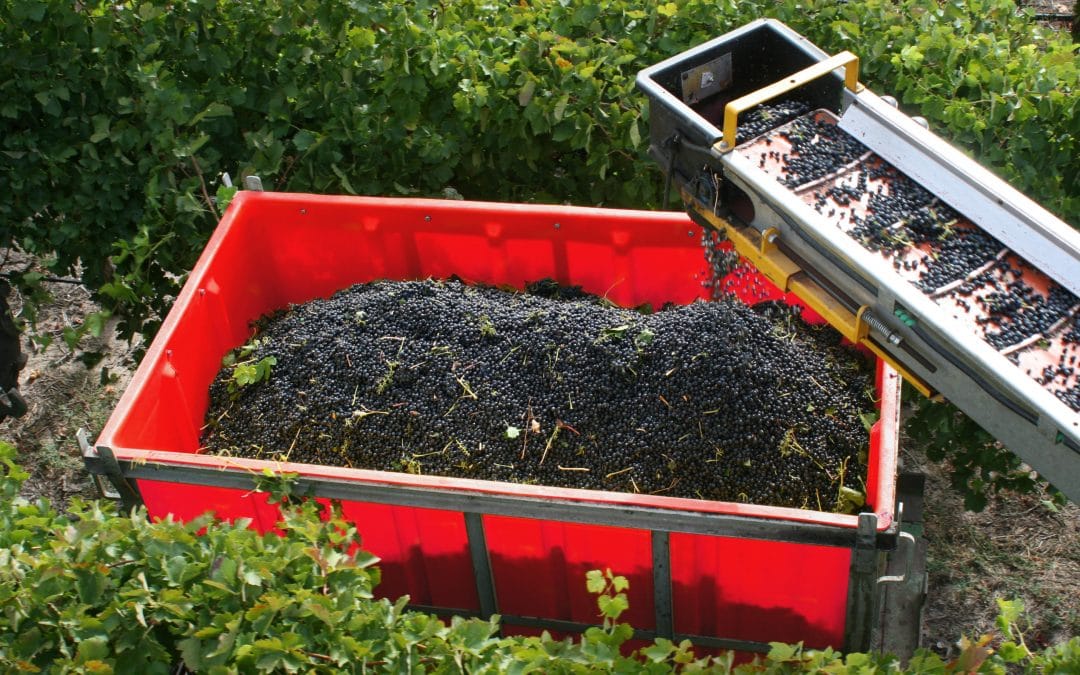
The process that transforms the grapes from the vines and into the wine that hits your table is a pretty fascinating one with many specialised nuances along the way. One of these is the picking bin that is used to store the freshly picked fruit, grape harvest is always about making the process easier and more efficient. Here we’ll look at how we can facilitate that process.

Grape Harvest – It’s All About The Harvest

Depending on the grape, the region, and the purpose of the grapes that are being harvested, the exact step-by-step picking process will only be known by the winemakers and viticulturalists. Technique and technology both have hands in this ever evolving process. However, something that won’t change is how the grapes are lugged around and stored before the next step in the grape’s journey. Whether it’s by hand or machine, picking grapes is something that can be simplified to plucking the fruit from the vine and storing it in a grape bin.

Choosing The Right Bin for Grape Harvest

Manual and mechanical harvesting are both two different ways that grapes can be picked from the vine. Using the right equipment can make your job a lot easier. For a grape bin to be of any use throughout harvest time, it needs to be tough, portable and spacious. The ideal bin will be manufactured to last with materials that will remain corrosion-free, hygienic, and protected from the harsh Australian elements.

Features of a Quality Grape Harvest Bin

  • The ideal size of the bin should be around 2.85 cubic metres to make sure that there is more than enough room to store the harvest at any one time.
  • When it comes to the material aspect of the bin, one of the most important aspects has to be that the bin meets Australia’s strict food storage standards and is made from a food-grade material such as Polyethylene.
  • Polyethylene also works effectively to ensure that the bin is not damaged by the sun’s UV rays and other elements
  • Additionally, for structural integrity, the bins should have sturdy steel frames so that the liner can withstand rough treatment while protecting its contents. Hot dip galvanised steel can ensure the longevity of the bin for an operational lifetime.
  • Bonus features to look out for would be bins that are available in multiple colours for identification purposes, with room for company logos etc.

These are just some of the basics that the ultimate bin should feature. Primarily your grape bin needs to be industry-centric that is, specifically designed for durability and built for the viticulture and agriculture industries. It’s essential that this type of equipment can be built tough and strong, it will be the workhorse of your productivity, not to mention efficiency.

If you’re in the market for the best type of grape harvesting bins around, check out Gorilla Products Australia and their collection of agricultural storage and harvest equipment. Contact us today.

REQUEST A QUOTE