BLOG

From Vineyard to Cellar: Building Safety Into Operations

The Hidden Cost of Preventable Incidents In...

The Hidden Cost of Preventable Incidents

In viticulture, the pressure to deliver is constant. Seasonal windows are narrow, labour is finite, and every harvest day counts. Within this intensity, safety often becomes something to manage rather than something to design into operations from the ground up.

Within viticulture and winemaking, workplace fatalities and serious injuries occur at rates that demand closer examination of how vineyard and winery operations can fundamentally shift their approach. Viticulturists and winery managers face distinct operational pressures such as seasonal intensity, high-value product handling, and specific equipment demands. The question becomes: how do operational managers reduce risk through infrastructure and systems design intentionally built for viticulture’s unique context?

This is where the conversation around safety becomes one about operational leadership.

Understanding Risk Across the Vineyard-to-Cellar Cycle

Safety incidents in the wine industry aren’t random. They cluster predictably across three critical phases: harvest handling, transport, and cellar operations. Each phase presents distinct risks shaped by the seasonal intensity, physical demands, and equipment integration.

Harvest Handling: The Manual Handling Challenge

Harvest represents the highest-risk operational window. Workers handle thousands of kilograms of produce under time pressure, often across uneven terrain and variable conditions. Safe Work SA (2024) identifies manual handling as the leading cause of serious injury in agricultural environments, injuries that frequently don’t heal completely and compound over seasons.

Each transfer point (field to vehicle, vehicle to cellar) multiplies handling incidents. The cumulative effect isn’t just injury; it’s productivity loss, staff turnover, and long-term operational reliability.

Transport: The Overlooked Risk

The journey from vineyard to cellar appears routine, yet it represents one of the highest-risk phases in the production cycle. Shifting loads, inadequate load restraint, and trailer instability on uneven terrain create conditions for serious incidents.

Cellar Operations: Structural and Ergonomic Risk

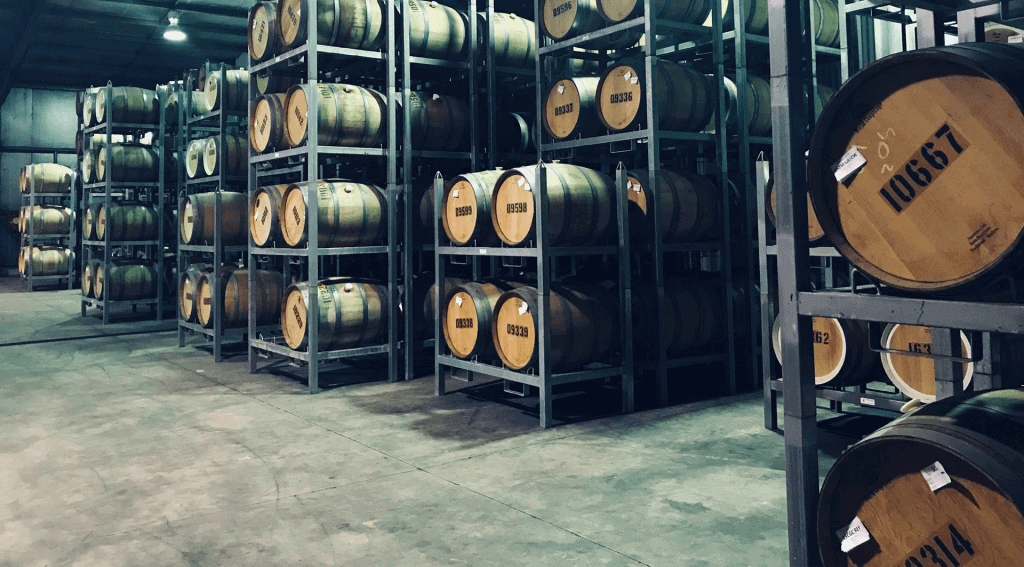
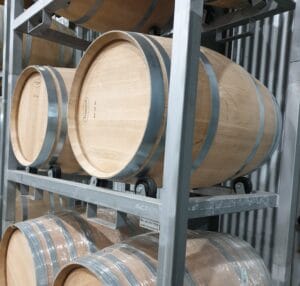
Once fruit reaches the winery, risk shifts from transport to structural integrity. Hundreds of barrels, many exceeding 500kg, stacked in high-humidity environments create an environment where equipment fatigue or design failure can be catastrophic. Inadequate stacking systems that rely on barrel-on-barrel pressure introduce multiple points of failure: the integrity of the stack depends not only on equipment design, but also on every barrel in the cradle being exactly the same size and the forklift operator’s skill in stacking correctly. Corrosion, structural fatigue, and ergonomic strain during barrel handling present ongoing risk that can quietly accumulate until failure occurs.


Example of barrel cradles fallen on the floor, due to relying on barrel-on-barrel pressure to remain stable.


Designing Out Risk: A Systems Approach

Research across occupational health and safety consistently points to the same conclusion: designing hazards out of operations is more effective than managing risks after they emerge.

This principle, known as the hierarchy of controls, places design-led solutions at the top.

For vineyard and winery managers, this means asking a different set of questions:

  1. Can mechanical systems replace manual handling at critical points?
  2. Are transport systems engineered for load stability and structural durability?
  3. Is cellar infrastructure designed to prevent equipment degradation and failure?

These questions shift safety from a compliance exercise to an operational investment.

Practical Solutions for Each Phase

Reducing Manual Strain Through System Design

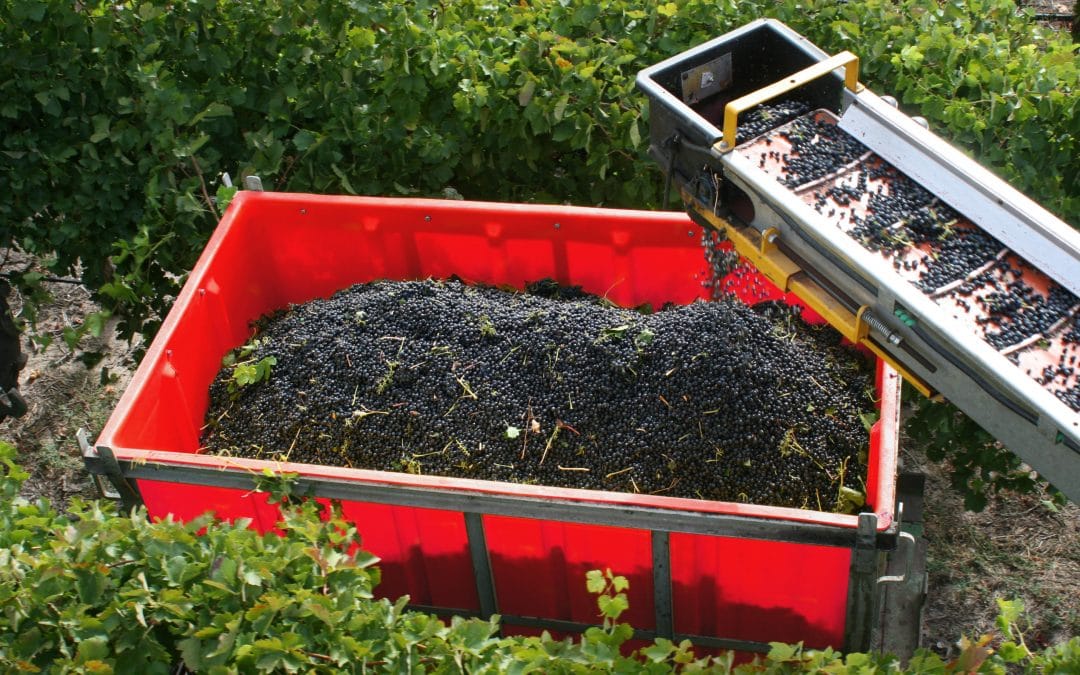
Modern bin systems engineered specifically for viticulture, with food-grade production standards and mechanical handling compatibility, fundamentally change the harvest equation. Gorilla’s Grape Bins and Produce Bins exemplify this approach: designed with forklift and bin-lifter compatibility built in from conception, they eliminate manual lifting and re-handling as operational necessities. Food-grade polyethylene liners maintain hygiene standards while reducing contamination risk, a dual benefit that addresses both safety and product quality.

Critical to safety is structural integrity under load. Gorilla bins feature heavy-duty steel frames with forklift sleeves integrated directly into the frame structure, not bolt-on attachments to plastic. This design prevents the risk of sleeve failure when rotating loads between 0.5 to 2.5 tonnes, a reliability that persists even after years of continuous use. The rigid frame construction and purpose-designed tie-down points provide superior load security compared to lightweight alternatives, protecting both product and transport personnel. Heavy-duty lids add an additional layer of protection during handling and stacking.

For larger grape bins, the crane wire tipping option offers a safer alternative to forklift rotation, removing the mechanical stress and operator risk associated with rotating heavy, full bins.

The operational shift is significant: instead of workers repeatedly lifting and transferring produce across multiple handling points, mechanical systems do the heavy work. Fewer manual handling incidents means reduced injuries, faster harvest cycles, and higher produce integrity from field to crush, outcomes that compound across seasons.


Straight from trailer to transport with easy assessable forklift points.


Transport Security as a Design Priority

Transport solutions engineered specifically for vineyard terrain remove instability as a variable. Gorilla’s Grape Bin Trailers demonstrate this principle: a low-centre-of-gravity chassis design paired with precision-fitted bin cradles ensures that load movement becomes a non-issue across rough ground. Fully galvanised construction provides structural durability that’s proven through years of operational use rather than theoretical, a critical distinction for vineyard managers evaluating long-term reliability.

Gorilla’s grape bins are designed with load-rated dee rings, which can be used as load restraint. This enables the bin to meet NHVR compliance when properly restrained. Lids can be fitted to the grape bins to contain liquids and prohibit road spillage, which also helps with biosecurity management during transport.

This design approach addresses a specific vulnerability in viticulture: the high-risk journey from vineyard to cellar, often across variable terrain where shifting loads and trailer instability create serious incident potential. When transport infrastructure is engineered to prevent load movement entirely, that risk category effectively disappears from your operation.

For managers, this translates into reduced downtime, fewer emergency maintenance calls during critical periods, and measurable incident reduction during the harvest window.


Cellar Infrastructure Built for Longevity

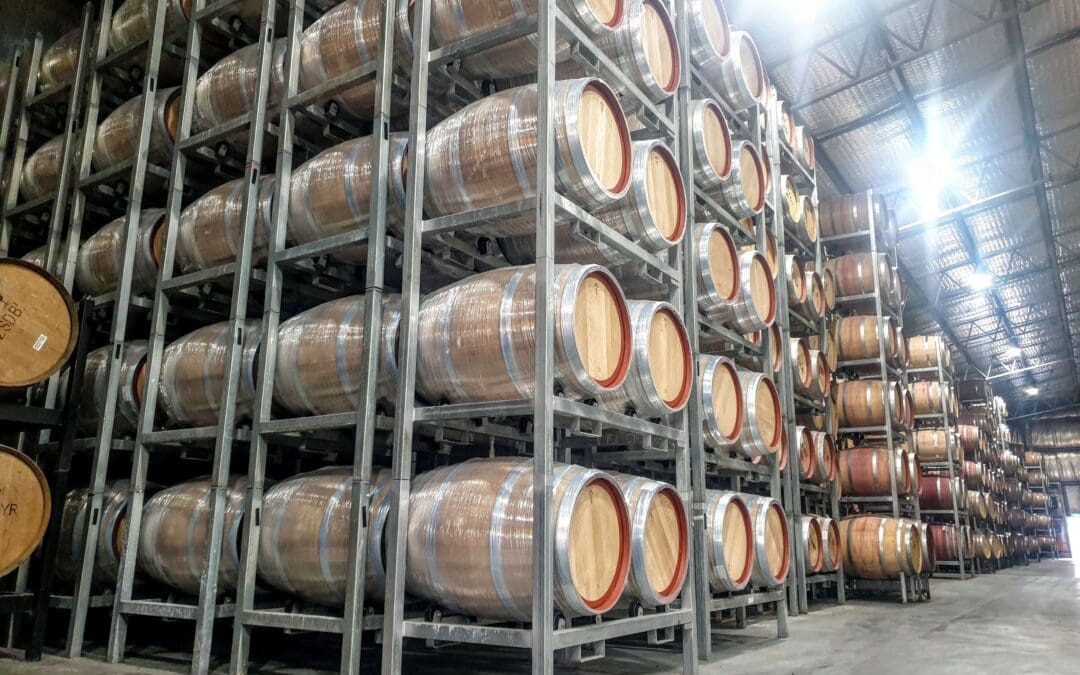
Barrel racks designed with winery operation in mind remove common failure points entirely. Gorilla’s Barrel Master, and Barrel King racking systems use interlocking designs and corrosion-resistant materials that prevent both structural degradation and barrel movement. Hot-dip galvanised finishes are non-negotiable in cellar environments as they prevent the rust, particularly critical for operations running at full capacity for months at a time.

Equally important is safety focused design;

  1. Smooth edges that eliminate catch points,
  2. Forklift compatibility removes unsafe manual intervention,
  3. High stacking ability with metal-on-metal pressure to ensure that cellar teams work with systems that inherently prevent collapse or tipping.

This isn’t about meeting standards, it’s about designing infrastructure so reliable that safety becomes embedded in operational culture rather than something requiring constant vigilance.

When cellar teams work with equipment that’s proven reliable across seasons and years, the confidence effect is measurable: fewer near-misses, faster incident response protocols, and staff retention improvements as teams feel genuinely protected.


The Business Case: Safety as Operational Resilience

Protecting your team is the most important aspect of designing safety into your operation, but there are also measurable business outcomes. Operations with fewer incidents experience:

  • Reduced unplanned downtime and maintenance costs.
  • Improved staff retention and team continuity
  • Higher productivity during critical seasonal windows
  • Lower workers’ compensation claims and insurance premiums.
  • Enhanced reputation and supply chain confidence

In viticulture and winemaking, where seasonal timing is everything, the operational resilience provided by well-designed infrastructure isn’t a luxury, it’s a competitive advantage.

Questions for Operational Review

As you approach the next harvest season, consider these questions as part of your operational safety strategy:

  • Where do manual handling incidents cluster? How can mechanical systems reduce that risk?
  • Is your transport infrastructure engineered for the terrain and load demands you operate under?
  • How old is your cellar infrastructure? Are your systems relying on barrel-on-barrel pressure?
  • What percentage of your team has received training on equipment use and incident reporting? Is that training aligned with how systems operate?
  • When evaluating equipment suppliers, how do you assess safety as part of the procurement decision?

The Path Forward

Safety leadership in vineyard and winery operations isn’t about perfect compliance. It’s about recognising that every decision from harvest bins to barrel racks to transport systems, either compounds or mitigates risk. Systems engineered for strength, durability, and human-centred design don’t eliminate all risk, but they support your team in reducing risk.

The wineries leading on safety outcomes are those embedding safety into infrastructure, training, and culture simultaneously.

Ready to Strengthen Your Operation’s Safety?

If you’re looking to reduce incidents, improve workflow reliability, and build a safer culture across your vineyard and winery operations, the Gorilla team is ready to help. Our team are able to assess your current operation and recommend design-led solutions built specifically for viticulture.

Get in touch with the Gorilla team to discuss your operation’s safety needs and explore how integrated systems can strengthen every phase of your production cycle, from pick to pack.


Further Reading

https://www.safeworkaustralia.gov.au/sites/default/files/2024-11/model_code_of_practice-how_to_manage_work_health_and_safety_risks-nov24.pdf

Why Upgrading Barrel Masters is a Great Idea for Wineries

If you are in the wine industry, you will know...

If you are in the wine industry, you will know that the storage and handling of your barrels is critical to maintaining the quality of your wine. Traditional barrel cradles, being the choice from a cost perspective, can be inefficient and even dangerous. That’s why transitioning to the Barrel Masters is a smart move for wineries looking to optimise their barrel storage and safety.

Pro’s of Barrel Cradels:

These racks have lower stacking heights, and all weight is supported by the bottom barrel, leading to instability and even collapse. In fact, Safework Australia, the organisation responsible for promoting safety in the workplace, has been focused on improving safe handling and use of traditional barrel cradles. Here are some of the concerns with cradles.

  • Cradles don’t allow for efficient access to the barrels
  • Makes topping, sampling, and pumping more difficult and
  • Time-consuming and harder for barrel-turning
  • No interlocking system

The Barrel Master, however, solves these problems and more, providing a safer and more effective storage solution for wineries.

Key Benefits of the Barrel Masters include:

  • High stacking capabilities: The Barrel Master allows for greater storage volumes with a minimal footprint, making the most of your space.
  • Safe and secure storage: The unique interlocking locating system optimises space-saving and structural checks, while the protrusion-free construction ensures the safety of machinery and personnel.
  • Versatile storage: The Barrel Master can accommodate thinner or uneven barrel sizes, providing greater flexibility for your winery.
  • Innovative rotation options: The Barrel Master offers a variety of rotation options, including part rotation, occasional 360° rotation, and frequent complete 360° rotation, allowing for easy access to all barrels.
  • Easy to move: The Barrel Master is portable and can be safely moved using a forklift.
  • Durable and long-lasting: The Barrel Master is available in pre-galvanised material or post-manufacture hot dip galvanisation for a longer life span. It also features a damage-resistant design with no sharp edges and seamless barrel turning innovation.

With full international design registration, the Barrel Masters holds Australian Registered Design No: 154262, USA Design Application No: 29/201283, Canadian Design Application No:106040, and International Design Application No: PCT/AU2004/000853.

By transitioning to the Gorilla Barrel Master, wineries can benefit from a safer, more efficient, and more versatile barrel storage solution.

Don’t let inefficient and potentially dangerous barrel cradles compromise your production. Talk to us today about how you can transition to the Gorilla Barrel Master.
 

barrel storage solutions

Gorilla Master Barrel Solutions

Barrel Kings – New Barrel Storage Solutions

Over the years, Gorilla Products barrel storage...

Over the years, Gorilla Products barrel storage solutions have improved drastically when updating from the Barrel Cradle to the Barrel Master, with improvements such as no longer relying on the structural rigidity of your barrels as a part of rack’s structure, improved stacking efficiency and ease-of-use. Since then, we have been working to further refine this design to further improve our stacking efficiency, maximum heights, safety, ease-of-stacking and more.

After years of research and development, we are proud to introduce our full-sized barrel storage solution: the Barrel King.

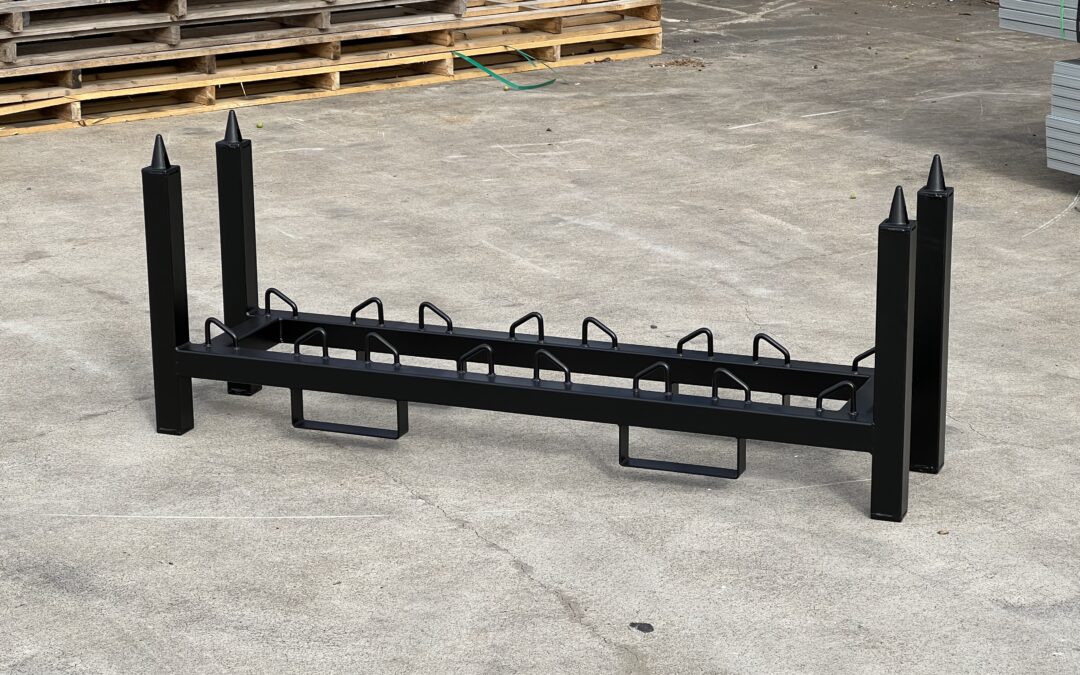
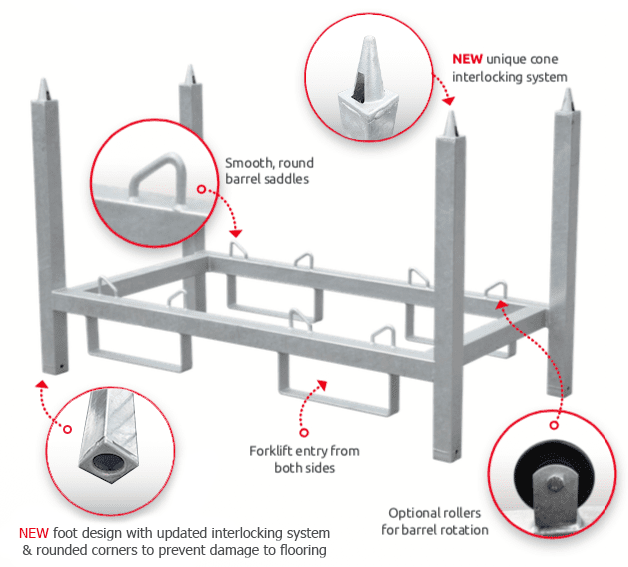
Barrel kings are a direct successor to the barrel master line of solutions, featuring a number of improvements including:

  1. New patented cone shaped interlocking system on the tops and bases of the rack to improve stacking efficiency thanks to their self-locating design
  2. Rounded base design to reduce scratching and damage to flooring
  3. Optional spring locking system to allow for safe stacking up to 10 racks high
  4. Damage-combating design with no sharp edges
  5. Optional rotation options including part rotation, occasional 360 deg rotation and frequent complete 360 deg rotation
  6. Highly versatile storage accommodating thinner or uneven barrel sizes
  7. Greater access for topping, sampling and pumping
  8. Strictly secure storage while bearing no weight on barrels

Gorilla barrel kings are built to engineering standards for their specified weight and height bearing limits and will increase the overall safety of your barrel store thanks to their heightened safety compared to barrel cradle style storage solutions.

Want to learn more? Download a free viticulture brochure here to view the full range of our products – Looking at building a new cellar door, barrel store or vineyard machinery shed? Check out our sister brand Spanlift Australia for more information regarding how we can assist with a complete solution for your winery!

Importance of Quality Grape Bins

Wine production is a complex process that...

Wine production is a complex process that requires the use of different equipment to ensure that grapes are harvested, stored, and fermented correctly. One of the most important and most overlooked pieces of equipment for this process is the humble grape bin. The importance of quality grape bins is huge when it comes to avoiding failure during transport which could cost you heaps of money.

Gorilla grape bins are a popular choice among grape growers for their durability and strength. These bins are made from high-density polyethylene (HDPE) plastic, making them resistant to impact, weathering, and chemicals. They are also lightweight and easy to handle, making them ideal for transporting and storing grapes.

One of the key benefits of using Gorilla grape bins is their stackability. These bins are designed to stack with each other while empty, which allows for efficient storage and transportation. This feature also helps to prevent damage to the grapes during transport, as the bins will not shift or tip over.

Gorilla grape bins come in a variety of sizes to accommodate different types of grapes and vineyards. They can hold anywhere from 1/2 ton to 2.5 tons of grapes, and are available in both open-top and closed-top designs. The open-top design allows for easy loading and unloading, while the closed-top design helps to protect the grapes from the elements.

Another benefit of Gorilla grape bins is their easy cleaning and sanitation. The smooth, non-porous surface of the HDPE plastic makes them easy to clean and sanitize, which is important for maintaining the quality and safety of the grapes.


Upgrade your wine production with our top-of-the-line grape bins. Call us on 08 8423 1036 or email us at sales@gorillaproducts.com.au today for more information to learn more about our full range of viticultural solutions!

ENQUIRE NOW

Why Barrel Racks are the right choice for Your Winery

  As a winery owner, the quality and...


As a winery owner, the quality and durability of your barrel racking is crucial for the proper aging and storage of your wine. Gorilla Agri Products, an Australian manufacturer, offers high-quality barrel racking solutions that are designed specifically for the wine industry. Not only do they provide a safe and secure storage option for your barrels, but they are also compliant with industry regulations.

Furthermore, choosing an Australian-made barrel racking ensures shorter lead times and improved delivery, as the product is manufactured in the same country. Supporting local manufacturing not only helps to promote the local economy, but also gives you peace of mind knowing that you are getting a top-quality product that is made to withstand the unique conditions of an Australian winery. Gorilla Agri Products also offers custom solutions to better fit your winery needs and can meet on site or online to discuss a solution.

In conclusion, when it comes to barrel racking, Gorilla Agri Products offers a superior option for wineries. Our locally made, industry-compliant, accredited and certified, and customizable solutions ensure the proper aging and storage of your wine, while supporting the industry and local economy. If you would like to learn more, check out our barrel storage solutions here!

REQUEST A QUOTE